
Social media is often regarded as a scourge on the mental acuity of the general population and often rightfully so. However, depending on which corner of the internet one resides, fascinating and insightful proposals are to be found, even if initially made in jest. This post in particular, coming from the blogging site tumblr, has stuck with me for years at this point. It personally resonated, but clearly struck a larger cord with a lot of others. The tagging system, initially used for categorization of posts, is often used on tumblr as a personal comments section, confessional, or soapbox, depending on the person. It is oftentimes as much a part of the content as the original post itself and here, the original author clearly found many opinions of their followers worth sharing. These thoughts touch on an affliction with the same target population as Tumblr: young girls and women. The condition in question is body dysmorphic disorder (BDD).
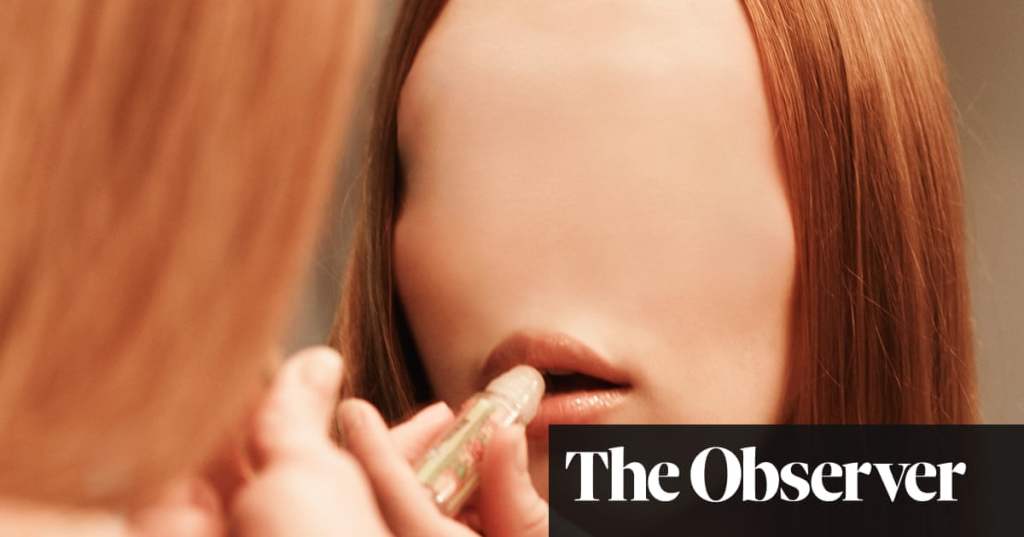
BDD is characterized by an occupation “with physical features which they perceive as flawed, though this is not apparent or a matter of concern to objective observers” and a “history of a repetitive behavioral component focused on the perceived physical anomaly, such as obsessively examining oneself in the mirror, or grooming to hide or fix the perceived flaw, or seeking reassurance from others about their appearance without satisfaction” (DSM) Colloquially, the condition is referenced as body dysmorphia, and the comorbidity of this disease with eating disorders (especially anorexia nervosa) is heavily emphasized.
Why is it so traumatic? Besides the obvious psychological impact of beauty standards, particularly for women and how female humanity is entangled with physical expectation, it is jarring and difficult to handle because it separates one’s body object with their body subject; their body subject being their disembodied self. Their experiences and senses are still intact, but their expressions of what they experience are contradicted by those around them. This reinforces the dualism of mind and body proposed by Descartes. BDD separates the body as unrecognizable and severs that connection by transforming the body into someone else, almost a different person. This can lead to a feeling of loss of control over the body ergo loss of control over one’s world.
As humans, “our body is our general medium for having a world” (Merleau-Ponty 2018: 82). From a phenomenological standpoint, we know the world through sensation and for so many of us, the sensation we rely upon most is sight. Sight tops the hierarchy of the senses: “visual dominance [is] a universal characteristic of all languages” (2015). When one cannot trust the senses, they cannot trust their world and when the sight they cannot trust is their own reflection, it heavily contributes to a fractured sense of identity. It would alter their relationship with the world and themselves beyond recognition. How do you see eye-to-eye with yourself?
Works Cited
Diagnostic and statistical manual of mental disorders: DSM-5. American Psychiatric Association. Arlington, VA: American Psychiatric Association; 2017.
Look first [Internet]. The hierarchy of the senses | Max-Planck-Gesellschaft. Max-Planck-Gesellschaft; 2015. Available from: https://www.mpg.de/8849014/hierarchy-senses
Merleau-Ponty M, Smith C. Phenomenology of perception. Nevada: Franklin Classics; 2018.
As per my other posts: the voice of the people



 The Body and Manipulation